Early Bird Registration Ends 11.29.25
Use Code at Checkout to get $50 OFF: READING50

Give your child the reading confidence they deserve - without the tears, guessing, or frustration
45-minute weekly small groups. Three progressive levels. 18 weeks. Limited spots.
Does This Sound Familiar?
You're not alone. Many parents watch their bright, capable children
struggle with reading and wonder what they can do to help.
✗
Your child avoids reading time and gets frustrated when practicing at home
Homework becomes a battle, and you can see their confidence slipping away
✗
Teachers mention they're 'behind' in reading, but you don't know where to start
You worry about them falling further behind as other kids progress
✗
Traditional tutoring hasn't worked, and you've tried multiple approaches
You're spending time and money without seeing real progress
✗
Your child can't sound out words or struggles with phonics basics
Reading becomes guesswork instead of a skill they can master
✗
They read slowly and have trouble understanding what they've read
School gets harder in every subject as reading demands increase
✗
Your child says they're 'stupid' or compares themselves to classmates
Their self-esteem suffers, and they start to believe they just 'can't read'
You’re not alone. At Edge Therapies we
see children who:
- Memorize words instead of sounding them out.
- Feel overwhelmed by unfamiliar or long words.
- Avoid reading because it’s “hard” or they feel embarrassed.
But… it’s not their fault. They just haven’t been taught to read the right way, using a research-based, multisensory, structured method.

Imagine This...
- Your child looks forward to story time so they pick up a book and read aloud confidently.
- You don’t have to re-teach homework or decode words for them because they’re doing it themselves.
-Their teacher says: “Wow — I’m seeing progress!”
They realize: “I can read this. I’m smart.”
Reading unlocks all other learning - spelling, fluency, comprehension - and you see that confidence translate into all subjects, not just reading.
At Edge Therapies our reading groups give your child more than just “help”, they give them the blueprint to become independent, capable readers.
Our Reading Groups
We offer two groups, each with three levels — so we meet your child exactly where they are and take them where they need to go.

Pre-Reading Foundational Group
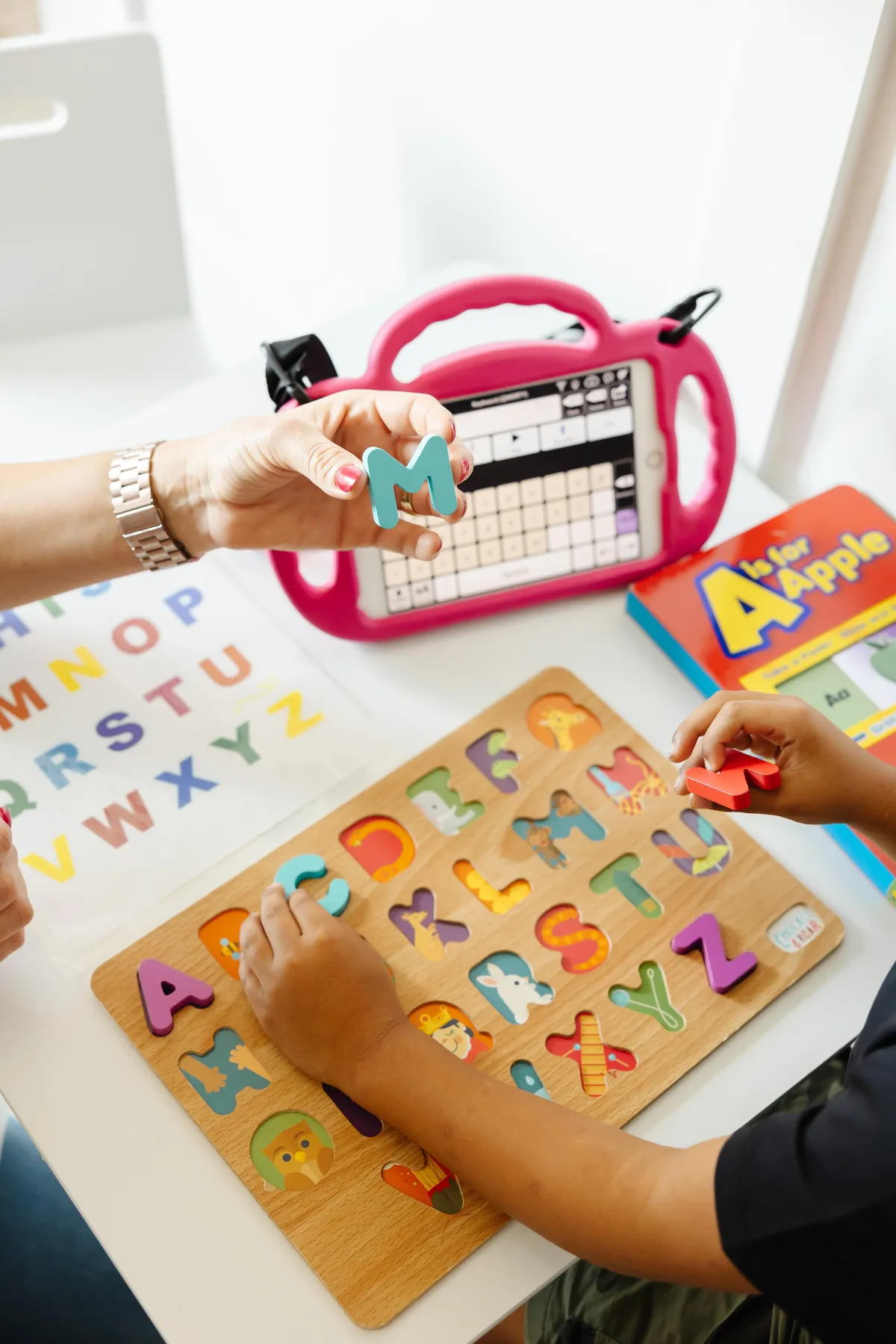
Reading starts before letters and books - it starts with how children hear and play with sounds. This group is designed for preschoolers and Kindergarteners who are not yet ready to decode words but need to build the critical auditory and language skills that make reading possible. Through playful games, movement, and interactive storybooks, your child will strengthen their awareness of how sounds work in words, so when it’s time to read, their brain is ready.
Each level is 6 weeks for a total of 18 weeks
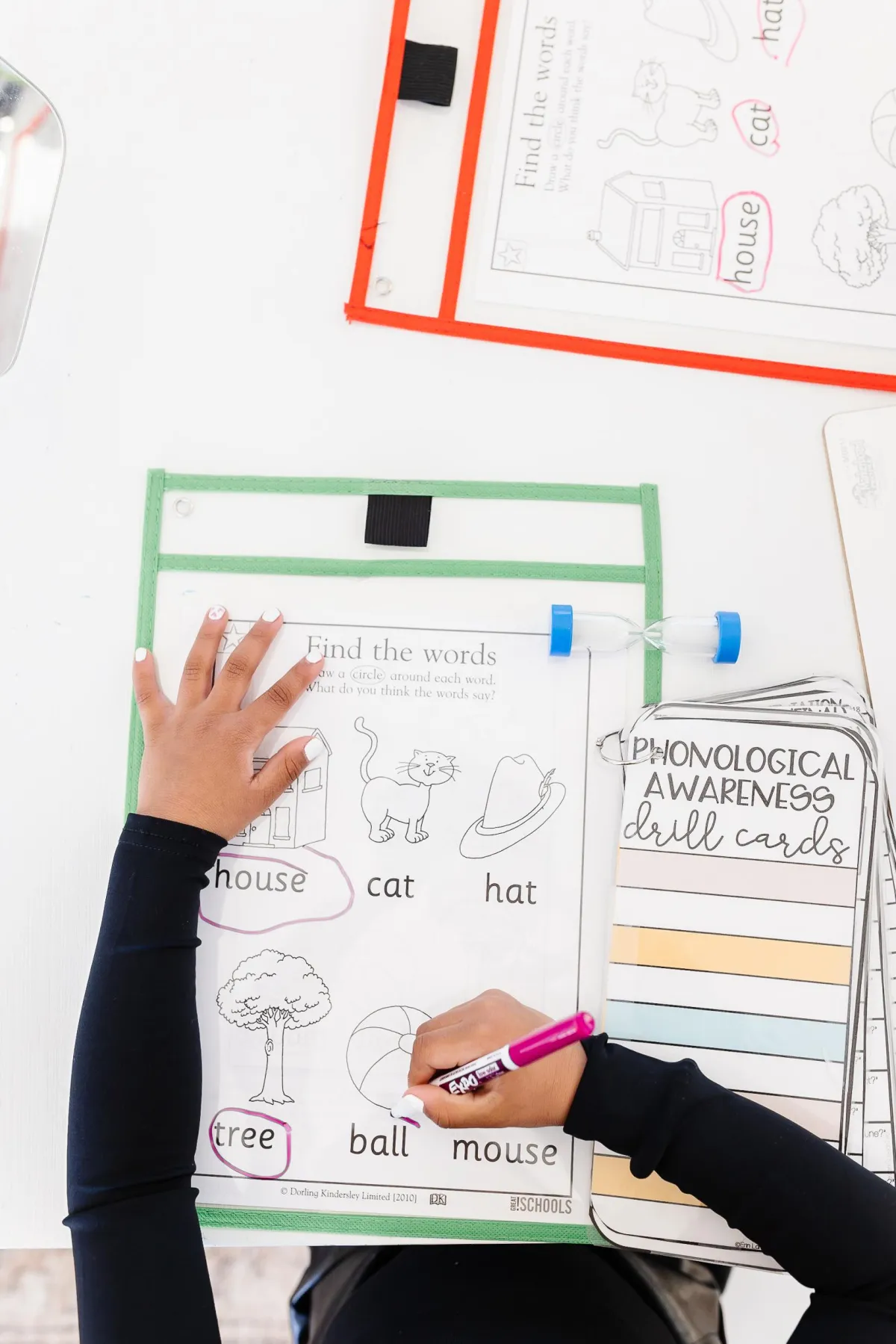
Level 1: Phonological Awareness
This foundational group focuses on broad sound awareness skills that prepare your child for reading. Using engaging activities and stories, your child will strengthen their ability to hear and play with the sounds in language—an essential first step toward becoming a confident reader.
What Your Child Will Learn:
- Rhyming words and matching sounds
- Alliteration (recognizing words that start with the same sound)
- Breaking sentences into individual words (sentence segmentation)
- Clapping and counting syllables in words (syllable segmentation)
These skills build the auditory foundation your child needs before learning to connect sounds with letters required for level 2.
Level 2: Phonemic Awareness
Now that your child is tuned into sounds, this level focuses on the individual sounds (phonemes) within words. Through fun, structured activities, your child will practice isolating and manipulating sounds, as well as blending and segmenting simple CVC words.
What Your Child Will Learn:
- Isolating initial, final, and medial sounds in words
- Segmenting CVC (consonant-vowel-consonant) words into individual sounds
- Blending sounds to read simple CVC words
This stage is key for developing the fine auditory skills needed to link sounds with letters in reading and spelling required for level 3.
Level 3: Consonant Phonics
At this level, your child will learn to identify and produce consonant sounds and start applying this knowledge to reading and writing. Using the Orton-Gillingham multisensory approach, your child will strengthen their understanding of consonants and begin decoding simple words confidently.
What Your Child Will Learn:
- Recognize and produce individual consonant sounds
- Apply consonant sounds when reading and spelling
- Begin decoding simple words using consonant phonics
This final step prepares your child to move into more advanced phonics and reading skills.

Word Reading Group
This Word Reading Program is for children who already know their letter sounds and are ready to begin true decoding and encoding. Children in this group should be able to identify most consonant and short vowel sounds so they can successfully learn to blend, read, and spell simple words.
**If your child is still learning letter sounds, our Pre-Reading Foundational Group is the best starting point.
Each level is 6 weeks, for a total of 18 weeks
Level 1: Foundational Closed Syllable
At this level, your child will learn the foundational skills needed to become a confident reader.
Focusing on basic consonant sounds, short vowels, digraphs, and simple word patterns, your child will begin decoding 3-sound words using a clear, structured, Orton-Gillingham–based approach. This level builds the essential decoding skills required for all future reading success.
What Your Child Will Learn:
- Identify and produce basic consonant sounds
- Master short vowel sounds for accurate decoding
- Read and spell simple CVC (3-sound) words
- Learn common digraphs (sh, ch, th, wh)
- Decode predictable word patterns with confidence
- Strengthen early spelling through sound-to-letter mapping
Level 1 helps your child build a strong reading foundation, giving them the skills and confidence needed to progress into more complex decoding and advanced phonics in the next level.
Level 2: Advanced Closed Syllables & Silent E
At this level, your child will build on their foundational decoding skills and begin working with more advanced closed syllable patterns.
Using a multisensory approach, your child will learn how blends, consonant clusters, and vowel-consonant-e (silent e) patterns work, allowing them to decode longer and more complex words with greater accuracy.
What Your Child Will Learn:
- Decode words with beginning and ending consonant blends
- Apply advanced closed syllable rules confidently
- Read and spell vowel-consonant-e (VCe) words
- Strengthen accuracy with longer 4–5 sound words
- Develop stronger reading fluency using multisensory practice
- Improve spelling by understanding syllable structure
This level deepens your child’s decoding skills, preparing them to tackle complex words and move confidently into r-controlled vowels, vowel teams, and open syllables in Level 3.
Level 3: R-Controlled, Vowel Teams & Open Syllables
At this level, your child will learn the more advanced phonics patterns necessary for fluent, confident reading.
Your child will master r-controlled vowels, vowel teams, open syllables, and more complex multi-syllable patterns. These skills help them read longer words smoothly and accurately.
What Your Child Will Learn:
- Read and spell r-controlled vowel patterns (ar, er, ir, or, ur)
- Master common vowel teams (ai, ee, oa, ie, etc.)
- Decode open syllables with long vowel sounds
- Apply multisyllabic word strategies to break down longer words
- Increase accuracy, fluency, and reading stamina
- Strengthen spelling with advanced phonics generalizations
This final level prepares your child for fluent reading, stronger comprehension, and success with increasingly complex academic texts.
Testimonials

Parent

We recently started the reading groups with Ms. Carrie, and my daughter has already made incredible progress in her reading! She absolutely loves working with Ms. Carrie, who makes each session engaging, fun, and completely stress-free. I’m so glad we decided to join the reading groups—it’s been such a positive experience for my daughter.
Parent
My son has absolutely LOVED being part of this reading group. He gets so excited when he earns his certificates, plus the weekly homework has been incredibly helpful for us to practice at home. We’ve seen such a big boost in his confidence and his willingness to try reading on his own. This program has truly made a difference for our family!
FAQs
Your Questions Answered: Clear Guidance from Edge Therapies
How do I know if my child needs the Pre-Foundational level or if they are ready to start Word Reading?
If your child is still learning to recognize and play with sounds (rhyming, syllables, beginning sounds) and doesn't yet know all their letter-sound pairs, the Pre-Foundational Level is the right place to start. If they already know their letters and sounds confidently and are starting to blend sounds to read words, they are ready for the Word Reading Program.
What if my child can’t attend all 6 sessions?
Groups run on a set schedule, and missed sessions cannot be refunded or made up unless the therapist must cancel. Even if you can’t attend every week, your child will still benefit from the skills and materials provided.
How many children are in each group?
We keep groups intentionally small — usually 4–6 children — to make sure every child receives individualized attention and guided practice.
Do we need to practice at home?
Yes. Each week you’ll receive simple, targeted homework designed to reinforce what your child learned. Just a few minutes of practice can make a big difference in their progress.
Can this program help children with dyslexia or reading difficulties?
Yes. Our groups use a structured literacy, Orton-Gillingham–based approach that is recommended for children with dyslexia and decoding challenges. However, every child progresses at their own pace, and we cannot guarantee specific results.
What if my child struggles in a group setting?
We do our best to support each child, but if we determine that the group setting isn’t the best fit, we may discontinue participation and discuss other options (such as individualized reading). In this case, refunds are offered only at therapist or company discretion.
